Detailed explanation of various performance parameters of pressure sensor
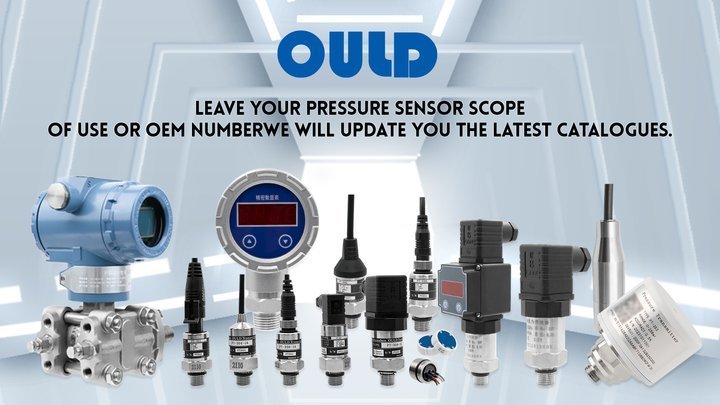
The pressure sensor mainly has the following parameters:
1. Capacity:
The measuring range refers to the rated load of the pressure sensor. The general units are KGf, N, etc. If the measuring range is 100KGf, the sensor measurement range is 0-100KGf.
2. Sensitivity Rated output:
Sensitivity is the output signal coefficient of the pressure sensor. The unit is mV/V. Common ones are 1mV/V and 2mV/V. The full-scale output of the pressure sensor = working voltage * sensitivity. For example: working voltage 5VDC, sensitivity 2mV/V, full-scale output. The range output is 5V*2mV/V=10mV. For example, the full range of the pressure sensor is 100KG, and the pressure is 100KG, the output is 10mV, and the pressure of 50KG is 5mV.
3. Non-linearity:
Nonlinearity refers to the percentage of the maximum deviation between the straight line determined by the output value at no load and the output value at rated load and the measured curve with increased load to the rated output value. In theory, the output of the sensor should be linear, but in fact it is not. Nonlinearity is the percentage deviation from the ideal. The nonlinear unit is: %FS, nonlinear error = measuring range * nonlinearity. For example, the measuring range is 100KG and the nonlinearity is 0.05%FS. The nonlinear error is: 100KG*0.05%=0.05KG.
4. Repeat ability:
Repeatability error refers to repeatedly loading the sensor to the rated load and unloading it under the same environmental conditions. The maximum difference in output value at the same load point during the loading process is the percentage of the rated output.
5. Creep:
Creep refers to the change in the pressure sensor output over time as a percentage of the rated output when the load remains unchanged and other test conditions remain unchanged. It is generally taken as 30 minutes.
6. Hysteresis:
Hysteresis means that the pressure sensor is gradually loaded from no load to rated load and then gradually unloaded. The maximum difference between loading and unloading output at the same load point as a percentage of the rated output value.
7. Zero point output zero balance:
Under the recommended voltage excitation, the output value of the pressure sensor at no load is the percentage of the rated output. Theoretically, the output of the pressure sensor should be zero when it is unloaded. In fact, the output of the pressure sensor is not zero when it is unloaded. There is a deviation, and the zero-point output is the percentage of the deviation.
8. Input resistance:
Input impedance refers to the impedance value measured from the input end of the pressure sensor (red and black lines for the Cangzheng pressure sensor) when the signal output end is open and the sensor is not pressurized.
9. Output resistance:
The output impedance refers to the impedance measured from the signal output end (the green and white lines of the Cangzheng pressure sensor) when the input end of the pressure sensor is short-circuited and the sensor is not pressurized.
10. Insulation impedance:
Insulation resistance refers to the DC resistance value between the circuit of the pressure sensor and the elastomer.
11. Operation Temp range:
The operating temperature range refers to the temperature range within which the performance parameters of the pressure sensor will not produce permanent harmful changes.
12. Compensated temp range:
The temperature compensation range is the temperature range within which the sensor’s rated output and zero balance are closely compensated so that they do not exceed the specified range.
13. Temperature effect on zero:
The zero point temperature effect refers to the effect of changes in ambient temperature on the zero point of the pressure sensor. It is generally expressed as the percentage of the zero balance change caused by the rated output when the temperature changes by 10°C. The unit is: %F.S./10°C.
14. Sensitivity temperature drift Temperature effect on out:
Sensitivity temperature drift refers to the change in pressure sensor sensitivity caused by changes in ambient temperature. It is generally expressed as a percentage of the rated output of the change in sensitivity caused by a 10°C change in temperature. The unit is: F.S./10°C.
15. Safe Load Limit:
Safe overload means that the pressure sensor will not be destructively damaged within this load, but it cannot be overloaded for a long time.
16. Ultimate overload:
Ultimate overload refers to the limit value of the pressure sensor load.
17. Excitation voltage Excitation recommend:
The excitation voltage refers to the working voltage of the pressure sensor, which is generally 5-12VDC.
If you are not sure what kind of pressure sensor is right for your project. please contact us